|
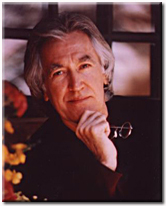
Larry Dossey
Larry Dossey, MD, is a former internist and Chief of Staff of Medical City Dallas Hospital and former co-chair, Panel on Mind/Body Interventions, National Center for Complementary and Alternative Medicine, National Institutes of Health. He is the author of ten books on the role of consciousness and spirituality in healing, including the New York Times bestseller Healing Words: The Power of Prayer and the Practice of Medicine.
Keynote: The Spectrum of Health: Thinking Unthinkable Things.
Monday, April 23
2:00 to 4:00 pm
Sometimes the great advances in healing come from the margins of science, areas that are overlooked. Dr. Larry Dossey will explore several such areas, whose implications for healthcare are profound:
(1) Beliefs and self-perceptions about one’s health,
(2) anomalous or spontaneous healings,
(3) hypnosis,
(4) contact with nature,
(5) mental imagery,
(6) deliberately caused bodily damage, and
(7) spirituality and prayer.
Learning objectives:
• Cite one study demonstrating the connections between self-perceptions and health,
• Identify one genetically based disease that has responded to hypnosis, and
• Describe two areas of spirituality and health that are currently being explored in most of the nation’s medical schools.
Workshop: Dirt and Optimism: The Extraordinary Healing Power of Ordinary Things
Sunday, April 27
Ballroom 3:30pm to 5:00pm
Every week modern medicine announces the arrival of yet another “wonder drug” or “miracle procedure” to a world that is increasingly wary of such high-tech cures. Drugs, transplants, and surgery don’t work for most of our aches and pains; and while we are grateful for these life-saving developments, there are associated risks that we can only ignore at our peril. Consequently, many of us are searching for simpler methods of healing.
The most effective way of dealing with the vast majority of our health problems is not complex, but utterly simple. The answers are all around us in plain sight—hidden in decidedly low-tech approaches whose healing power and ability to add to life’s fulfillment have been overlooked or forgotten.
Dr. Dossey will discuss two such things — the value of “dirt” and exposure to unhygienic conditions during the period when our immune system is developing; and the value of optimism in promoting good health and longevity.
Based in solid science, Dossey’s approach honors the best of both conventional and complementary healthcare, and seeks a balance between the two.
Learning objectives:
- Cite one piece of evidence linking optimism with health,
- Describe the "hygiene hypothesis," and
- Identify one disease in which the hygiene hypothesis has led to a breakthrough in therapy.
|






 CEs Available: This conference is approved for CEs through the National Board of Certified Counselors.